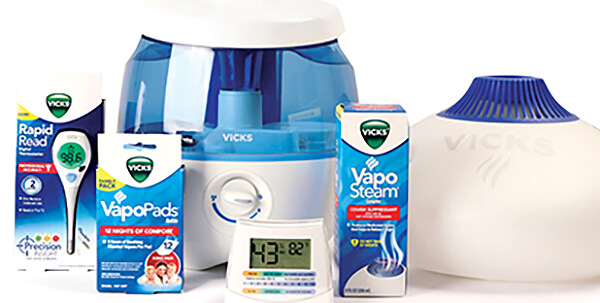
Vicks products are available for purchase online and in-store at most major retailers.
VICKS SUPPORT
View product-specific FAQs & videos
Sourcing compliant E Vape products globally in 2026 requires more than comparing prices, flavors, or factory photographs. It requires documented control from formulation to final delivery. The World Health Organization reports that more than 100 million people use electronic nicotine delivery products worldwide, creating a large but closely scrutinized market. In Great Britain, ASH’s 2024 survey recorded approximately 5.6 million adult vapers, showing how quickly consumer demand can change. These figures do not guarantee commercial opportunity. They increase the responsibility to verify every claim.
Dr. Colin Mendelsohn, a physician and tobacco-harm-reduction researcher, has stated, “Vaping is substantially less harmful than smoking.” That statement still requires careful context. E Vape products must never be presented as risk-free, therapeutic, or suitable for non-adult consumers. A reliable sourcing process should examine ingredient specifications, laboratory reports, battery safety, emissions testing, packaging, labeling, and batch traceability. It should also confirm that each product matches the destination market’s authorization, notification, recycling, and age-verification requirements.
Details matter. Check the QR code against the factory’s batch record. Compare the printed nicotine strength with independent laboratory results. Review whether the charger, pod, and outer carton belong to the same tested configuration. Small mismatches can become expensive recalls.
The difficult part is consistency.
Reports from WHO, ASH, and national regulators provide useful evidence, but they cannot replace local compliance review. Suppliers change materials. Rules change faster than websites. A strong 2026 strategy therefore combines technical audits, qualified legal advice, and continuing post-market monitoring. It may feel slower. That is often the safer commercial decision.
Global e-vape sourcing in 2026 begins with a written compliance map. Each target market may define products differently. Confirm nicotine limits, permitted ingredients, device standards, labeling rules, and sales restrictions. Do not rely on one global template. A product accepted in one country may require redesign elsewhere.
Build a market-by-market checklist before contacting suppliers. Request complete ingredient records, safety data, batch specifications, and accredited laboratory reports. Verify that testing covers emissions, electrical safety, materials, and packaging. Check whether reports match the exact model and production batch. A certificate alone is not proof. Review the testing laboratory, method, date, and sample identity.
Compliance also includes the supply chain. Assess factory controls, worker training, traceability, complaint handling, and recall procedures. Packaging should carry approved warnings, usage information, batch codes, and age restrictions where required. Marketing claims need careful review. Avoid medical language and unsupported performance promises. Independent legal advice remains important because rules can change quickly. Our first compliance checklist was too broad. It missed local language requirements. That mistake showed why local review matters. Keep signed records, approval versions, and supplier communications in one controlled system. A careful audit trail supports responsible market entry.
Global sourcing in 2026 starts with a country-by-country compliance map, not a supplier catalogue. The Global State of Tobacco Harm Reduction 2024 estimated 114 million vapers worldwide in 2023. That figure signals demand, not permission to sell. The European Union’s Tobacco Products Directive limits nicotine liquid to 20 mg/mL. Refill bottles may contain up to 10 mL. Cartridges and tanks are limited to 2 mL. Packaging, warnings, ingredient files, and national notifications also apply.
Regional product limits vary sharply. The United Kingdom requires product notification and safety information. Its disposable-vape sales ban took effect on 1 June 2025. India prohibits electronic cigarette manufacture, import, sale, and advertising under its 2019 law. In the United States, lawful entry generally requires product-specific marketing authorization. Evidence may include toxicology, manufacturing controls, and marketing plans. FDA review is not a simple registration.
A reliable supplier file should include laboratory results, batch traceability, child-resistant packaging, emissions testing, and change-control records. Verify every claim against the destination regulator. Certificates are not universal passports. The World Health Organization’s 2023 report highlights major differences in nicotine controls, advertising rules, and online sales. Audit age verification, importer licensing, tax registration, and warehouse controls. A spreadsheet can still miss a local-language rule. That assumption deserves testing.
Global sourcing of compliant e-vape products requires more than comparing factory prices. Screen manufacturers, suppliers, and logistics partners as one connected system. The WHO 2023 report noted that 88 countries had no minimum-age requirement for electronic nicotine delivery products. Rules remain uneven. A supplier approved in one market may fail another market’s standards. Do not trust certificates alone.
Request current business licenses, product registrations, test reports, ingredient specifications, and batch records. Verify each document with the issuing laboratory. The ISO Survey 2023 recorded over 1.2 million ISO 9001 certificates worldwide, but certification does not prove product compliance. Audit production floors, calibration labels, incoming-material controls, and complaint procedures. Check whether sample products match mass-production units. They often do not. That uncomfortable gap deserves attention.
Supply-chain partners need the same scrutiny. Confirm warehouse conditions, shipment records, recall procedures, age-related controls, and destination-specific labeling. Require serialized batch identification from component supplier to final delivery. Independent testing should cover emissions, electrical safety, battery performance, packaging, and restricted substances where applicable. Keep signed change-control records for formulas, hardware, artwork, and contract factories. A recent audit may still miss a subcontractor. Build a second verification layer. Good sourcing is sometimes slower, less convenient, and more expensive than expected. That may be the safer signal.
| Market / Region | Core Compliance Gate | Key Product Parameters | Documents to Request from Suppliers | Factory and Product Screening | Supply-Chain Controls | Indicative Preparation Time |
|---|---|---|---|---|---|---|
| United States | A tobacco-product authorization is generally required before a new ENDS product may be marketed. The responsible manufacturer or importer must also address establishment registration, product listing, reporting, labeling, and applicable federal and state requirements. | No single federal nicotine concentration ceiling applies to all ENDS, but nicotine content, emissions, ingredients, battery safety, child-resistant packaging, warning statements, and state restrictions must be assessed separately. | Authorization or regulatory-status evidence; product specifications; ingredient and emissions data; laboratory reports; manufacturing-site details; quality-system records; warning-label artwork; certificate of analysis for each production lot. | Confirm traceability of nicotine, e-liquid, coils, batteries, and packaging. Audit change-control procedures and verify that production samples match the regulatory dossier. | Use a licensed importer of record where required; classify the product correctly; retain lot, serial, and shipment records; review federal, state, and local excise-tax obligations before dispatch. | Typically 6–18+ months for a new regulated product, excluding unresolved authorization or enforcement issues. |
| European Union / EEA | Nicotine-containing products are generally governed by the Tobacco Products Directive framework as implemented by each member state. Product notification is normally required before placing the product on the market. | Nicotine liquid generally may not exceed 20 mg/ml; refill containers are generally limited to 10 ml; cartridges and tanks are generally limited to 2 ml. Products must address child resistance, leakage prevention, labeling, and health warnings. | Ingredient list; emissions information; toxicological data; nicotine-dose data; manufacturing and quality controls; packaging drawings; notification submission evidence; safety data sheets; transport classification documents. | Check conformity with the applicable national implementation rules, authorized-language labeling, electrical safety, battery documentation, leakage testing, and consistency between notified and supplied configurations. | Appoint an EU-based economic operator where needed; maintain country-specific packaging versions; verify customs classification, excise duties, extended producer responsibility, and distance-selling requirements. | Normally 4–9 months for dossier preparation, testing, notification, and production approval. |
| United Kingdom | Nicotine-containing vaping products are regulated under the UK tobacco and related-products framework. Products generally require notification before being placed on the UK market, together with compliant labeling and packaging. | The principal limits generally mirror the 20 mg/ml nicotine concentration cap, 10 ml refill-bottle limit, and 2 ml tank or cartridge limit. The exact requirements for packaging, warnings, and permitted ingredients must be checked against current UK rules. | UK notification reference; full ingredient and emissions file; toxicology and stability data; packaging artwork; child-resistance and leakage evidence; supplier declarations; batch-level laboratory reports. | Screen for UK-specific artwork, authorized importer details, nicotine accuracy, prohibited medicinal claims, electrical safety, and documented procedures for post-market complaints and recalls. | Keep separate UK and EU stock records where artwork or regulatory status differs; confirm customs declarations, import VAT, excise treatment, and fulfillment restrictions for online sales. | Approximately 3–8 months for a new configuration, depending on testing and notification readiness. |
| Canada | Products are subject to federal tobacco and vaping-product rules, including restrictions on promotion, packaging, health warnings, ingredients, and nicotine concentration, alongside provincial and territorial requirements. | Nicotine concentration is generally capped at 20 mg/ml. Packaging, health warnings, permitted claims, flavor restrictions, display rules, and minimum-age controls may vary by jurisdiction and should be validated before shipment. | Ingredient and nicotine-strength records; bilingual English/French artwork where required; laboratory certificates; battery and charger documents; manufacturing-site information; provincial tax and registration records where applicable. | Verify bilingual labeling, nicotine accuracy, child-resistant packaging, advertising limitations, provincial flavor rules, and consistency between the product specification and retail package. | Use a customs broker familiar with vaping products; segregate stock by province; calculate federal and provincial excise stamps or taxes where applicable; retain import and lot records. | Usually 3–7 months for product testing, artwork, tax preparation, and market-entry setup. |
| Australia | Vaping products containing nicotine are generally handled within a therapeutic-goods and prescription-based framework. Importation, supply, pharmacy distribution, and product presentation require specific regulatory checks. | Nicotine products must meet applicable therapeutic-goods standards and packaging requirements. Commercial supply outside permitted channels may be prohibited or restricted, and state or territory rules may add further controls. | Therapeutic-goods regulatory status; ingredient and concentration data; batch release records; stability data; safety data sheets; compliant artwork; importer and pharmacy-channel documentation. | Reject suppliers that describe restricted products as ordinary consumer goods. Verify nicotine source, purity, therapeutic claims, child-resistant packaging, tamper evidence, and recall capability. | Use an approved import and distribution pathway; confirm prescription and pharmacy controls; maintain temperature, security, batch, and expiry records; obtain written customs clearance advice. | Often 6–12+ months because regulatory classification and channel approval must be resolved before commercial supply. |
| Japan | Nicotine-containing liquids may fall under pharmaceutical regulation, while nicotine-free devices and liquids can be treated differently. Importation, claims, and sales channels require product-by-product legal review. | Do not assume that a product legally sold in another market can be sold in Japan. Confirm nicotine status, ingredient classification, permitted claims, packaging language, electrical safety, and import quantity rules. | Japanese regulatory opinion; full formulation; nicotine assay; impurity profile; SDS; Japanese labeling; electrical and battery test reports; importer authorization; claims review. | Separate nicotine and nicotine-free supply chains. Verify that the factory can prevent cross-contamination, maintain accurate formulation records, and produce Japan-specific packaging. | Use a local regulatory representative or importer where appropriate; confirm customs treatment before production; control product claims and online listings in Japanese. | Approximately 3–9 months, depending on classification and importer review. |
| Singapore | The importation, sale, possession, and use of e-vaporisers and related components are subject to strict prohibition and enforcement controls. | Commercial sourcing for the Singapore market should normally be treated as prohibited unless a competent authority confirms a specific lawful exemption or use case in writing. | Written legal assessment; authority correspondence; end-use statement; shipment classification; product photographs; customs and carrier acceptance confirmation. | Do not rely on supplier assurances or “general merchandise” descriptions. Screen product listings, invoices, cartons, and transshipment routes for prohibited goods. | Exclude the market from ordinary commercial fulfillment unless a documented exemption applies. Conduct restricted-party, customs, and transit-route checks. | Commercial launch should not proceed without written confirmation of legality. |
| United Arab Emirates | Vaping products are subject to national standards, conformity requirements, customs controls, excise taxation, and local emirate-level retail and advertising rules. | Products generally require compliant packaging, health information, nicotine disclosure, child-resistant features, leakage controls, and evidence that the formulation and device meet applicable Gulf-region technical requirements. | Conformity documentation; laboratory test reports; Arabic and English artwork; ingredient list; nicotine assay; SDS; battery transport documents; importer registration and tax records. | Verify conformity marking requirements, Arabic labeling, halal or prohibited-ingredient screening where relevant, battery safety, age-control procedures, and absence of therapeutic or cessation claims unless authorized. | Use a locally registered importer; confirm excise-tax treatment and customs codes; maintain emirate-specific distribution records; ensure the freight forwarder accepts lithium-battery shipments. | Usually 2–6 months for testing, conformity documentation, importer onboarding, and artwork approval. |
Sourcing compliant e-vape products globally in 2026 requires evidence, not attractive samples. Request a current test report for every product and batch. Prefer reports from laboratories accredited to ISO/IEC 17025. Check the laboratory’s accreditation scope, report number, testing date, and sample description. The report should match the exact device, liquid formulation, battery, and packaging. A certificate copied from an older batch is not enough.
Inspect the product physically. Confirm child-resistant features where required, leak resistance, battery protections, and clear ingredient information. Packaging should show required warnings, net contents, manufacturer details, importer information, batch codes, and disposal instructions. Labels may need local languages and specific font sizes. Requirements differ by destination. Never treat one market’s approval as global permission. Keep dated photographs of cartons, labels, seals, and instruction leaflets. Small differences matter.
Regulatory documents should form a traceable file. Include conformity records, safety assessments, declarations, customs information, and market-specific registrations when applicable. Ask suppliers to explain each document in plain language. Then verify key details independently. I have seen complete-looking files with mismatched product names and test dates. That weakness is easy to miss. A second review can feel slow, but it protects the purchase. Requirements also change, so confirm them with qualified local counsel or the relevant authority before shipment.
How to Source Compliant E-Vape Products Globally in 2026?
Importation should begin with classification, not a supplier quotation. Confirm each destination’s product category, nicotine rules, labeling language, packaging standards, and import permits. Customs files should match the physical shipment, including invoices, batch numbers, ingredient declarations, safety data, and laboratory reports. The World Health Organization reported approximately 1.25 billion tobacco users worldwide in 2022, showing why regulators examine nicotine products closely. Requirements also differ between neighboring markets.
Market monitoring must continue after customs clearance. Track regulatory notices, product recalls, complaint patterns, age-control performance, and online listings. Maintain a country-by-country compliance register with named owners and review dates. Grand View Research estimated the global e-cigarette market at approximately 28.2 billion US dollars in 2023. Growth increases exposure to scrutiny. Data is rarely clean. Sales dashboards can miss unauthorized listings, while distributor reports may arrive late.
Ongoing compliance needs documented change control. A new battery, flavor ingredient, filling partner, or label design can trigger a fresh assessment. Supplier audits should verify traceability, testing competence, and corrective-action records. Keep evidence live. Independent testing remains valuable, but it does not replace regulatory review. One weakness deserves attention: many programs measure shipment approval, yet overlook post-market signals. A stronger process connects customs documents, laboratory results, customer complaints, and withdrawal decisions in one controlled record. WHO guidance and local authority updates should shape these reviews, rather than outdated global assumptions.
Regulatory nicotine-strength limits differ across major markets. Confirm local product authorization, packaging, notification, import, and post-market monitoring requirements before shipment.
Maximum nicotine concentration shown in mg/mL: the European Union and United Kingdom limit consumer e-liquids to 20 mg/mL, Canada limits vaping substances to 20 mg/mL, and New Zealand permits up to 50 mg/mL under its regulated-product rules. U.S. federal rules do not establish a single nationwide nicotine-concentration cap, so the United States is excluded from this numeric comparison.